
🏔️ What Hiking in the Mountains Taught Me About Leadership
This week I went up to the Gornergrat. Alone. Just me, my thoughts, and the Matterhorn.
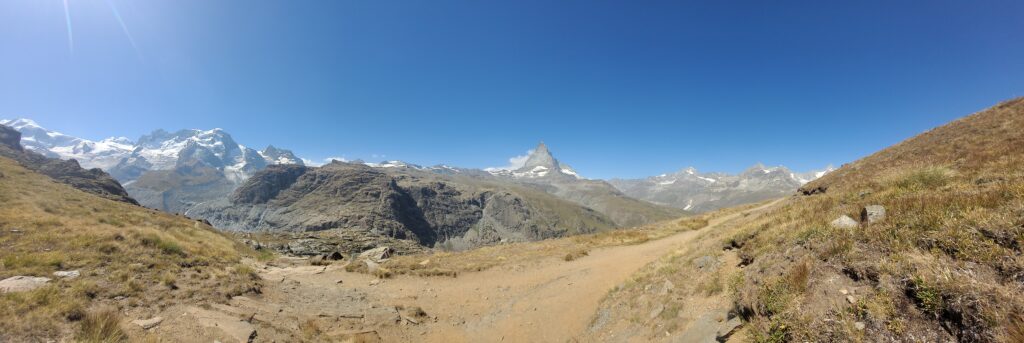
As I boarded the train, I noticed I was surrounded by large tourist groups, mostly from South Korea, China, and Japan. Each group was herded by a guide with the obigatory little flag, leading them toward the 3,000+ meter altitude. Some were wearing Crocs or Birkenstocks, carrying selfie sticks and spare smartphones. Hardly anyone had real gear, and certainly not the equipment for a sudden weather shift above 3,000 meters. And why should they? They go up by a safe train and the walk down is easy, isn’t it?
Meanwhile, I carried a full pack: rain gear, warm clothes, hiking sticks, water, food. I didn’t need half of it that day. I cursed myself on the way down for lugging that extra weight. But I owned my choice. I take responsibility for my body, my safety, my decisions. That’s leadership. It starts with myself.
And that’s where the lesson hit.
Would I let my team, participants, or guests “climb” like this, unprepared? No way.
I would have sent them back to change. Or excluded them from the route. Why?
Because leadership means responsibility. Leadership means accountability.
Leadership starts with self-awareness and ends with protecting those who trust you.
The Leadership Gap
I watched these groups hike in slippers. Some slipped. Some fell. And I kept thinking: what kind of guide lets their people go up like this?
Were these “guides” just maximizing tourist revenue? Hiding behind liability waivers and “Terms & Conditions”? Or had they forgotten that real leadership is about trust, not transactions?
It reminded me of the modern corporate world.
Too many “leaders” hide behind dashboards, metrics, and processes. They let their people walk into complexity unprepared, untrained, unsupported. Hoping the disclaimers will cover them when things fall apart.
I see it all the time.
👉 No reflection.
👉 No pause.
👉 No self-check-in.
👉 Just “more, more, more.”
And when things go wrong, the finger-pointing begins.
But My Gut Knew
Back to the mountain. At the last moment, I changed my plan. I wanted to do a glacier route. It’s steep and “risky”. But I hadn’t slept well. My body felt off.
I stood at the trailhead and said: No. Not today.
Was I angry at myself? Disappointed? Not at all.
It was a clear, conscious decision. My gut said no. I listened.
It’s the same wisdom that’s saved me more than once. On racetracks and in deep dives. My gut always knows first. When I ignored it, I paid the price. Broken collarbones. Crashed bikes.
Now I know better.
The gut decides. The brain figures out the logistics.
This, for me, is what conscious leadership is about.
Slowing down.
Tuning in.
Feeling what’s present, not just reacting to what’s expected.
Self-Leadership First, Then Team
If you can’t lead yourself, how can you lead others?
If you don’t listen to your body, your signals, your intuition: why should your team trust you in a storm?
Leadership is not about ego. It’s about energy coherence.
It’s about building trust. Through presence, awareness, and grounded decisions.
That’s the field I operate in. That’s the field I teach.
Not checklists, but conscious choice.
Not hustle, but resonance.
Not force, but integrity.
I had a beautiful day in the Alps.
And my biggest takeaway wasn’t the view of the Matterhorn.
It was this:
In a world obsessed with speed and success, the real leadership advantage is learning how to slow down and listen.



0 Comments