
Human Design – Large Group (OC16)
Large groups follow a different order.
A large organization is not simply a scaled-up version of Penta. As the group grows, hierarchies, functional logic, power bases, and lines of communication emerge. OC16 makes these dynamics visible.
Human Design
OC16
More people do not only change the size. They change the system.
In larger groups, personal proximity is no longer sufficient as an organizing principle. Direction, Interaction, Logical Enforcement, Innovation, Management and Competitiveness are distributed across functions, organizational layers and informal power bases.
OC16 reads this structure beyond the organizational chart. It reveals which functions are actually present, where communication breaks down and where accountability exists only formally.
The Perspective
What OC16 reveals in large organizational units.
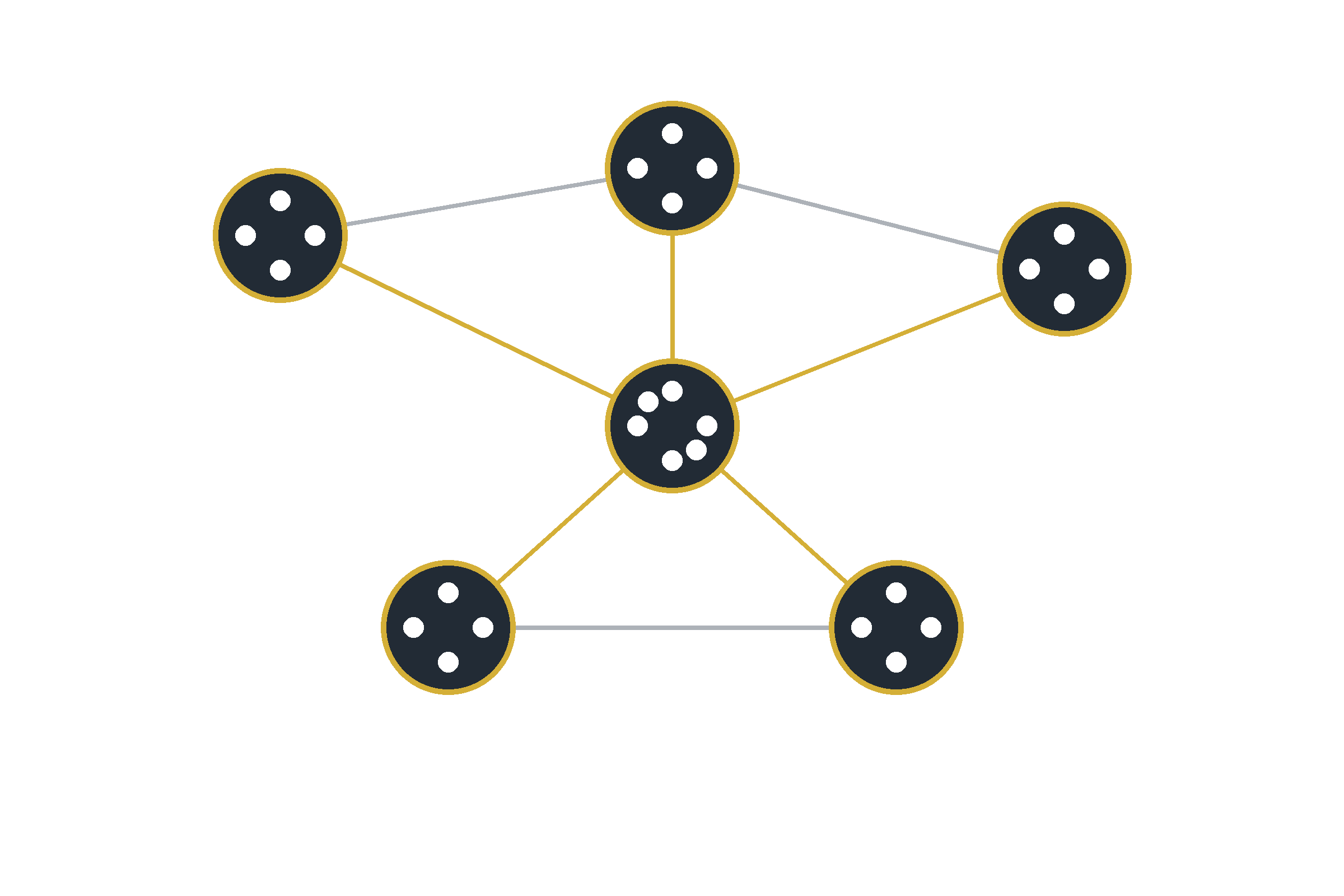
The six business streams of large groups.
Management
Management aligns people with the organization’s purpose, culture and way of operating. It creates a shared understanding of where the organization is going, what belonging means and which behaviors are expected. At its core, this is cultural conditioning.
The second dimension is execution. Accountability is organized so that decisions become concrete action. Management controls the operating environment and ensures that tasks are not only approved, but completed.
Logical Enforcement
Logical Enforcement is the norm-setting force of the organization. It defines what is considered correct, defensible and safe. It operates through rules, assessment, control, recognition and consequences.
Its logic does not primarily serve the individual. It serves the functionality and continuity of the organization. It shapes behavior, processes and standards. It rewards alignment and sanctions deviation.
Competitiveness
Competitiveness gives an organization its identity. It reveals what the business stands for, what it defends and which position it claims in the market. This is where the heart and soul of the organization reside—not as a written mission statement, but as tangible will.
This force concentrates individual drive and directs it toward the collective. It carries the courage to take a position, accept risk and hold firm against resistance. Every OC16 operates within competition. The question is not whether. It is where—and against whom.
Interaction
Interaction pulls people into a shared experience. It creates connection through common experiences, similar expectations and mutual recognition. It regulates the emotional climate of the organization and determines how proximity, belonging, conflict and daily crises are processed.
This is where ideas, expectations and the image of what the organization intends to achieve emerge. At the same time, pressure builds: progress, commitment and commercial results become emotionally charged.
Direction
Direction is more than a vision. It translates an inspired idea into a path that can be planned. It determines where resources flow, which priorities apply and where the organization directs its competitive energy.
Balanced Direction connects creative expression with structured thinking. It gives the organization a future perspective and clarifies the contribution it intends to make for customers, the market and society.
Innovation
Innovation is the impulse for renewal within a large organization. It challenges existing operations, opens new possibilities and creates pressure for change.
This force operates internally and externally. Internally, it changes operational processes and how performance is delivered. Externally, it changes perception, communication, sales and market positioning.
The Reading
OC16 Analysis for Leadership, Business Functions and Organizations
The analysis connects chart mechanics with organizational reality. It examines functions, power bases, information pathways and structural gaps.
01 System Boundary
The relevant business unit, its leadership, interfaces and communication lines are clearly defined.
02 Functionality
Existing and missing OC16 functions and business streams become visible.
03 Power Structures & Communication
Formal accountability is contrasted with the influence pathways that actually shape the organization. Communication lines are then realigned.
04 Business Translation
The insights are applied to decisions, structure and business operations. Practical options for resolution and implementation are defined.
The next Perspective
The organizational chart shows accountabilities. OC16 shows how the organization actually functions.
An OC16 analysis reveals the invisible organizational architecture of large groups.

